

Palavras-chave
Paisagem
Escultura
Natureza
Metrica
Como Citar
Resumo
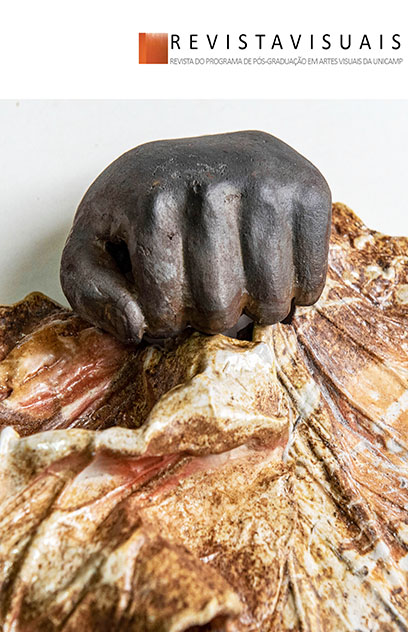
A natureza e a matéria dela extraída potenciaram a imaginação formal e a imaginação material do homem. Estas duas entidades fundacionais da acção artística conduzem àquilo a que se pode chamar uma poética da criação (Bachelard, 1942). Dele decorrem em boa parte, os conceitos de paisagem e a história da sua metamorfose. Ou, se quisermos, o problema constante do artifício versus a natureza. Ou, ainda, o problema de dar forma a um corpo ou, de como a imagem da sua representação se priorizou relativamente a ele, na cultura actual e, na arte em particular. O tacto, conseguido pela materialidade da escultura é o que permite a esta distinguir-se da imaterialidade da cultura actual, oferecendo-nos um porto de abrigo face à indiscernibilidade do mundo virtual. Neste contexto e através do meu trabalho escultórico, verificar-se-á como a problemática da Paisagem em Metamorfose: Declínio e Reedificação do Natural na Arte actual se inscreve nas questões em cima enunciadas.
Referências
BACHELARD, Gaston (2012). Imagination and Matter//1942. In KASTNER, Jeffrey (2012). Nature. Inglaterra, Londres: WhitChapel/ Documents of conteporary art.
CAUQUELIN, A. (2013). Paisagem e virtual, dois mundos separados. In Paisagem e Património. Portugal, Porto: Dafne Editora / CHAIA. PP 19-31.
CASTEL-BRANCO, C. (2017). A Índia nos Jardins Portugueses. Portugal, Lisboa:
KRAUSS, R. (1981). Passages in Modern Sculpture. USA, Cambridge: The MIT Press.
MADERUELO, J. (1990). El espacio raptado. Interferencias entre Arquitectura y Escultura. Madrid: Mondadori.
WEISS, A. (1998). Unnatural horizons: paradox and contradition in landscape architecture. USA, New York: Princeton Architectural Press.
ROGER, A. (2008). Vida y muerte de los paisajes. Valores estéticos, valores ecológicos. In El paisaje en la cultra contemporânea. Espanha, Madrid: Editorial Biblioteca Nueva, S. L.. Pp 67-85.
SARDO, D. (2017). O Exercício Experimental da Liberdade. Portugal, Lisboa: Orfeu Negro.

Este trabalho está licenciado sob uma licença Creative Commons Attribution-NonCommercial-NoDerivatives 4.0 International License.
Copyright (c) 2020 Revista Visuais